
Introduction
After the difficult years of the pandemic, the cab sector in the Basque Country -and especially at Bilbao Airport-is facing a renewed and optimistic outlook. Tourism in Bizkaia is rebounding strongly and the airport (affectionately known as La Paloma) is reaching unprecedented passenger figures. At the same time, digitalization is transforming the way people request transportation, and services like Uber or Cabify have entered the scene (although in a limited way for now in Euskadi). In this blog post we will analyze what the future holds for cabs at Bilbao Airport in 2025. We will talk about the most relevant tourism and airport trends after the pandemic, the increase in passenger traffic, the digital revolution in transport, competition from VTC platforms, and the opportunities that all this opens up for the local cab.
What we are going to tell you
- Tourism trends after the pandemic in the Basque Country
- Record passenger traffic at Bilbao Airport
- Digitalization of transport: cab modernization
- Uber, Cabify and competition from VTCs
- Opportunities for local cabs in 2025
- Conclusion: Key benefits for cabs in Bizkaia
1. Tourism trends after the pandemic in the Basque Country
Tourism in Bizkaia and in the Basque Country as a whole has experienced a remarkable recovery after the pandemic. In 2023 and 2024 record figures were reached in visitor arrivals and tourist spending. For example, in Bilbao city alone between June and September 2023, 454,828 tourists were registered, 3.6% more than the same period in 2022 (which had already been the best historical figure) according to bilbaoturismo.net. This trend continued in 2024, consolidating Bilbao as a benchmark urban destination. From January to November 2024, the city recorded 1,151,075 inbound travelers and 2,289,706 overnight stays, slightly exceeding the 2023 figures. This indicates that tourism demand has not only recovered, but already exceeds pre-pandemic levels.
An important change in the post-COVID stage is the increased presence of international tourism. Currently, approximately 52% of visitors to Bilbao are foreigners (compared to 48% nationals), with visitors from France, Germany, the United States, the United Kingdom and Italy standing out according to bilbaoekintza.eusWhat does this mean for the cab sector? That we are carrying more and more passengers from other countries in our vehicles, with specific needs (language, payment methods, tourist information) but with a huge business potential if we know how to serve them well. In addition, the institutions are betting on quality tourism all year round, not only during the high season. Bilbao, for example, is promoting itself as a venue for major cultural and sporting events in order to spread visits over the 12 months.
Among the highlights of 2025 in Bilbao are the UEFA Europa League Final (May 21 at San Mamés) – the first time an event of this caliber is held in the Basque Country – as well as a stage of La Vuelta 2025 in September, international music festivals (BBK Live, Jazzon, BIME, etc.) and MICE congresses (meetings, incentives, conferences, exhibitions). Each of these events will attract thousands of additional visitors.
For us, as cab drivers, that translates into more transfers to/from the airport, hotels, event venues and sightseeing tours around the city. In short, the post-pandemic tourist wave in Euskadi works in our favor: more tourists, more trips and greater diversity of clients throughout the year.
2. Record passenger traffic at Bilbao Airport
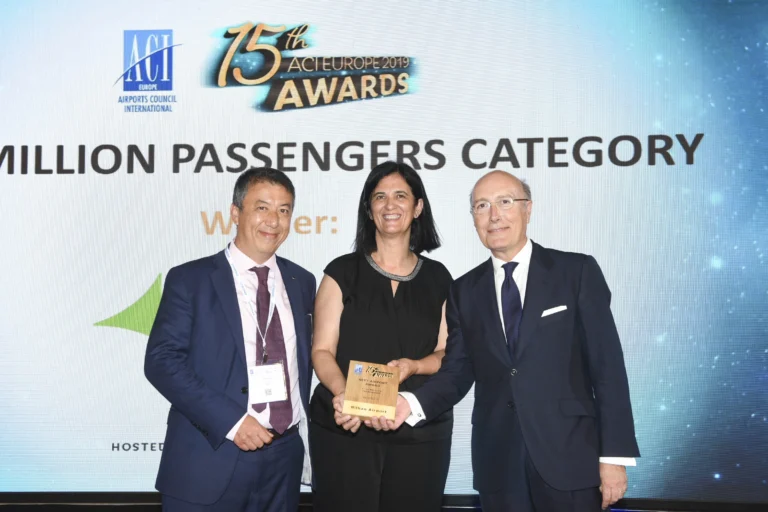
Linked to the tourism boom is the growth of Bilbao Airport, our main place of business. After the drop in traffic in 2020-2021, La Paloma has once again taken off strongly. 2024 closed with 6,777,267 passengers, which is an all-time record and a 7% growth compared to 2023 according to aena.es. It’s official: Bilbao Airport is the airport with the most passengers in all of northern Spain and already ranks among the 12 largest in the country. To put it in perspective, those almost 6.8 million passengers in 2024 even exceed the numbers of 2019 (pre-pandemic).
For airport cab drivers, this context is very promising. More flights and more passengers mean more runs. Let’s think that every new international flight that arrives are dozens (or hundreds) of people who need a transfer to the city or to other locations in Bizkaia. And here the official airport cab has a clear competitive advantage: we are on site at the terminal exit, available immediately, without long waits. Many travelers – especially those coming for the first time or with bulky luggage – prefer to take the cab for the convenience of arriving directly at their destination.
If we manage peak demand well (for example, when that flight from New York lands or when all the fans leave after a game), we can make the most of this passenger boom.
“Knowing that they are waiting for you, and not waiting in line when you arrive at Bilbao airport, is priceless”. Comment from a national tourist Semana Santa 2025.
3. Digitalization of transport: cab modernization
We live in the digital age, and passenger transportation is not far behind. In the wake of the pandemic, the adoption of mobile apps, online booking and contactless payments has accelerated for virtually all travel services. The customers of 2025, whether tourists or locals, expect to be able to order a cab from their mobile, see where it’s coming from, know the approximate price in advance and pay by card or phone without hassle. The good news is that the cab sector in Bilbao has taken a giant step to adapt to these expectations.
Since April 2025, the TaxiBilbao application has been in operation, promoted by the City Council in agreement with the main cab drivers’ associations. This app unifies practically the entire fleet (774 cabs in Bilbao) and allows the user to request a cab, see the estimated time of arrival and know the maximum price of the journey in advance. The latter is a very important change: the customer has transparency and a guarantee that he will pay at most what was indicated when ordering (if the meter shows less, he pays less). In essence, the traditional cab service catches up with Uber-type platforms in terms of convenience and user confidence. As mobility councilor Nora Abete said, “this application will allow access to the entire fleet and better match supply to demand,” using real-time data to optimize service.
But the digitalization of the cab in Bizkaia is not only in the app. Many of us used to use tools such as Pidetaxi or other booking applications. Also, more than 96% of cabs in Bilbao accept payment by card or other electronic means, something essential today (goodbye to that “do you have change?”!). Even future functionalities such as advance booking and integrated online payment are being explored. All of this allows us to compete on a level playing field in the technological arena. It’s no longer true that “ordering an Uber is easier than taking a cab” – users can now order an official cab from their mobile just as quickly, and with the peace of mind of a regulated service.
Another facet of modernization is sustainability. We are seeing more and more hybrid and electric vehicles at our taxi ranks. In fact, Bilbao already has dozens of 100% electric cabs thanks to fleet renewal plans, and it is expected that by 2030 the entire urban cab fleet will be zero-emission. This ecological effort connects with the sensibility of many current travelers, who value clean transportation options. A tourist arriving for transportation at Bilbao airport will appreciate knowing that the city is committed to eco-friendly cabs (there is even a Tesla operating as a cab in Bilbao, a pioneer in Spain!). Being greener not only benefits the planet, it also improves the cab’s image compared to other alternatives. In short: digitalization and innovation are playing in favor of the local cab, making it more efficient, comfortable and aligned with the trends that mark the future of mobility.
4. Uber, Cabify and VTC competition.
We can’t talk about the future of transportation without mentioning the platforms of Vehicles for Transport with Driver (VTC) such as Uber, Cabify or others. In recent years they have entered many cities offering services similar to cabs. In Bilbao and Euskadi their presence has been more discreet, partly due to strict regulations. The regulation known as “1/30” limits VTC licenses to one for every 30 cabs, which has contained their expansion. In fact, in the entire territory of Bizkaia in 2024 there were around 91 VTC licenses compared to hundreds of cab licenses. The VTC companies themselves recognize that Basque laws hinder their growth, and as of today Uber in Bilbao operates with very few cars (UberX with a few units) and Cabify has a modest presence. For users, moreover, the price difference between an Uber/Cabify and a conventional cab here is not very great, and many visitors do not even consider looking for Uber; they directly take a local cab that they know is available.
Now, although the “threat” of these platforms in Bilbao has been limited, their mere appearance has served as a stimulus for the cab. It has forced us to improve and modernize (as we have seen with the app, digital payments, etc.) and to emphasize our strengths. What are those strengths? First, capillarity: there are official cabs in every neighborhood and municipality, 24/7, something that a new service takes years to build. Second, knowledge of the terrain: cab drivers in Bilbao and Bizkaia know our streets, shortcuts, traditions and even the weather better than anyone else. A VTC driver perhaps relies more on GPS; we bring the personal touch and safety of a local expert behind the wheel. Third, trust and security: the traveler knows that in an official cab he has all the legal guarantees, travel insurance, a professional driver accredited by the City Council and no surprises in the rates.
Of course, competition forces us not to rest on our laurels. We must continue to offer an excellent service so that those who try a cab will repeat before with cab than with any other platform. The key is to take advantage of the differential advantages: for example, we can use our tourist experience to recommend a restaurant in Old Bilbao to that passenger we have just picked up at the airport, or help with a word in Basque for the curious visitor. That human plus is difficult to match by a pure app service. In conclusion, Uber and Cabify are there and are a reality of the market, but in Bilbao the official cabs are still the kings of the road and now, thanks to innovation, they compete in their own digital terrain.
The arrival on the scene of platforms such as Uber or Cabify should serve as a reference to awaken innovation, banish outdated practices and position ourselves as the best alternative for the traveler.
5. Opportunities for local cabs in 2025
With all of the above, the outlook for cabs at Bilbao Airport in 2025 appears to be full of opportunities. Let’s list some of the most important ones and how we can take advantage of them as professionals:
More tourists = more transfers: The increase of national and international travelers to Bilbao and Bizkaia means a direct increase of potential customers. People arriving for cultural tourism (museums, gastronomy, events) or business need to move around the city and its surroundings. Cabs can be the best option for occasional trips or personalized itineraries (for example, taking visitors to San Juan de Gaztelugatxe or to the wineries of Rioja Alavesa on a private excursion). If we position ourselves as tourist ambassadors with local knowledge, these tourists will value hiring an official cab for such experiences.
International events and congresses: 2025 and 2026 bring high-level events to Bilbao (European sports finals, rugby championships, professional congresses, trade fairs…). During these events, the demand for transport skyrockets. Here there is an opportunity to collaborate even with hotels and organizers for transfer services. For example, coordinate with a hotel to be available at key times before and after a match or concert, ensuring that attendees have a cab without waiting. These large events test the capacity of public transportation, and the local cab can shine by taking the lead in door-to-door mobility.
Collaboration with the tourism sector: Never before has it been so important to strengthen ties with hotels, travel agencies, tourist offices… If a hotel receptionist has confidence in the punctuality and good service of airport cabs, he will recommend us to his guests. Some cab associations in Bilbao already work in agreements with hotels for arranged transfers. Also theBilbao Bizkaia Tourism Board values the cab as part of the welcome experience (we are often the first local face a traveler sees upon landing). By maintaining high standards of service (clean vehicle, friendly driver, basic languages), we reinforce that initial good impression of Bilbao.
Intelligent use of technology: The TaxiBilbao app not only benefits the user; it also benefits us! Thanks to it, we can optimize downtime and provide more services at times of high demand. It is convenient to become familiar with all its functions, because it can allow us, for example, to receive requests from areas near the airport when we are in line, or identify hot spots in the city where a cab is needed. The data analytics it collects will help us to better plan our days (knowing at what times there are peaks from certain areas). In short, technology used well should translate into more productivity and more revenue for the cab driver.
Loyalty and online reputation: Although the traditional cab did not have visible “user ratings”, now with apps and social networks, our image is also played on the internet. This is an opportunity: if we provide an excellent service, many customers will comment it in travel forums, on Google, TripAdvisor, etc. There are already travelers in 2025 who say “in Bilbao it is better to take an official cab, it is easier and cheaper than Uber”, which is invaluable positive publicity. Let’s encourage happy customers to share their good experiences. A good natural SEO is achieved when it appears in searches that Bilbao airport cab is reliable, fast and fairly priced. By taking care of our reputation, we will gain more repeat and recommended customers.
In short, the post-pandemic scenario has brought a renaissance in the tourism and mobility sector that we can capitalize on. Far from being a service “in decline”, the local cab in Bilbao is in full transformation and with doors open to new business niches. The key will be to adapt continuously, listen to the modern customer and differentiate with human quality and local knowledge.
Conclusion: Key benefits for cabs in Bizkaia
To close, let’s recap the key benefits that all this context means for cab drivers in Bilbao and Bizkaia, for the immediate future:
Rising demand: More air passengers and more tourists in the city mean more potential work for cabs. The airport touching 7 million travelers and a fashionable destination ensure a steady flow of customers.
Successful modernization: The adoption of digital tools places the cab at the technological forefront, facilitating the user experience and optimizing our service. We no longer lose trips due to lack of digitalization.
Institutional support: Local authorities value the role of the cab in sustainable and tourist mobility, implementing measures to improve it (municipal app, recovery of inactive licenses, flexible schedules). This means that we are not alone: the cab is considered part of Bilbao’s mobility solution.
Local competitive advantage: In the Basque Country, Uber/Cabify type platforms operate with limitations and on a small scale, so the official cab maintains the predominant position. In addition, we have improved in speed and transparency, neutralizing the advantages offered by these apps.
Added value and trust: Our service offers something unique: professional drivers who are hosts of their homeland. Trust in official Bilbao cabs (regulated, safe and with clear fares) remains high among users. We are part of the quality image of Bilbao as a destination.
In short, the future of cabs at Bilbao Airport and in Bizkaia looks very optimistic. If we continue to adapt, offering a close treatment and taking advantage of modern tools, local cab drivers will not only survive the new times, but we will be protagonists in the tourist development and sustainable mobility of our land. Every trip from La Paloma is an opportunity to show the best of Bilbao and our service. Here’s to a prosperous 2025 on wheels!
Sources: AENA and local press data on passenger numbersaena.esBilbao Ekintza tourism news bilbaoekintza.eusVTC regulations in the Basque Country cronicavasca.elespanol.cometc.
Thanks for reading!